
Microcement Shower Problems, Mold and Upkeep
The problems to watch for in a microcement shower are cracking, an uneven texture and water getting through, and they follow an incorrect install, which is why our owners and lead subcontractor spent weeks studying the process with the supplier. SEMCO, the manufacturer we are certified with, says installation skill plays a major role in how a microcement shower turns out, and that its X-Bond formula, when properly installed, will not crack over time. This guide covers what goes wrong, what SEMCO says about mold and cleaning, and the permit question for a shower in Austin. For how we take on these projects, see microcement in Austin.
What are the downsides of microcement in a shower?
The main downside is that it is unforgiving to install. Unlike tile or paint, microcement needs precise layering, specialty materials, controlled curing and the correct sealing system, and when any of those is wrong the finish can crack, show an uneven texture or let water through.
SEMCO describes its shower system as a liquid waterproofing membrane, two hand-troweled layers of microcement about 1/8 inch thick in total, and a final sealant. Each layer does a job. The membrane is the waterproof barrier, the sealer protects the surface, and SEMCO’s installation guide says thorough cleaning of the surface underneath reduces the risk of peeling or discoloring.
The other downsides are about care rather than failure. Harsh cleaners can strip the sealer, and some shower products can soak into it if they are left on, which is covered below.
Does mold grow on microcement?
SEMCO says the final sealant on a microcement bathroom prevents mold, mildew and discoloration, and that a seamless shower removes the grout lines that SEMCO says can attract mold and mildew. Those statements are the manufacturer’s; we did not find a published mold test for the material in SEMCO’s bathroom guide or data sheets.
In practice that puts the weight on the sealer and on cleaning. SEMCO says harsh cleaners can strip the protective seal, and a stripped seal can stop doing that job, so the care routine below matters more in a shower than anywhere else in the house.
How do you clean and maintain a microcement shower?
Clean it with a pH-neutral cleaner, warm water and a soft cloth or microfiber. SEMCO’s maintenance guide sets out what to avoid:
- Bleach, ammonia and acid-based “heavy-duty” cleaners, which can strip the protective seal
- Vinegar and lemon-based cleaners, which SEMCO says are too acidic
- Steel wool, scouring pads and stiff brushes
- Residue from purple shampoo, self-tanner and similar products left on the surface; SEMCO recommends rinsing it off as soon as you finish in the shower
On resealing, SEMCO’s guide says to talk to your installer about resealing every 2 to 3 years in certain high-traffic areas. It does not give a separate interval for showers, so ask the person who installs yours what the sealer they used needs.
Can you apply microcement yourself?
You can, but SEMCO says microcement requires a skilled applicator, especially in wet areas. The application needs precise layering, specialty materials, controlled curing and the correct sealing system, and SEMCO’s own advice for a shower is to choose an installer with experience in showers and wet areas and to ask about their waterproofing method and sealing process.
We did not want to offer the finish until we understood it. Our owners and lead subcontractor spent weeks studying the process directly with the supplier before applying it on a client project, and we are SEMCO Certified Installers. We cover the material itself in Microcement vs Plaster.
Can microcement go over existing shower tile?
SEMCO says it can, with proper preparation. Its bathroom guide describes cleaning the tile, leveling the grout lines and priming before the microcement goes on in thin layers, which avoids full demolition and adds little height at thresholds and fixtures.
Whether that suits a particular shower depends on what is under the tile and whether the shower itself stays, which is also what decides the permit.
Do you need a permit for a microcement shower in Austin?
If the shower or tub is replaced, yes. The City of Austin’s list of work exempt from building permits covers tiling and similar finish work, but it does not exempt a new or replacement shower, tub or tub-and-shower combination. The list does not name microcement, so we confirm the permit path for each scope before the work is priced.
A bathroom remodel in a single-family home or duplex can use the city’s Residential Express Permit when no wall is removed or relocated, no plumbing fixture is moved or added, and the only drywall removed is around the tub, shower or sink. Once a wall moves, or a toilet, shower or sink changes location, the remodel falls outside the Express Permit and goes through the city’s residential plan review. When required, we coordinate permits and inspections as part of a bathroom renovation.
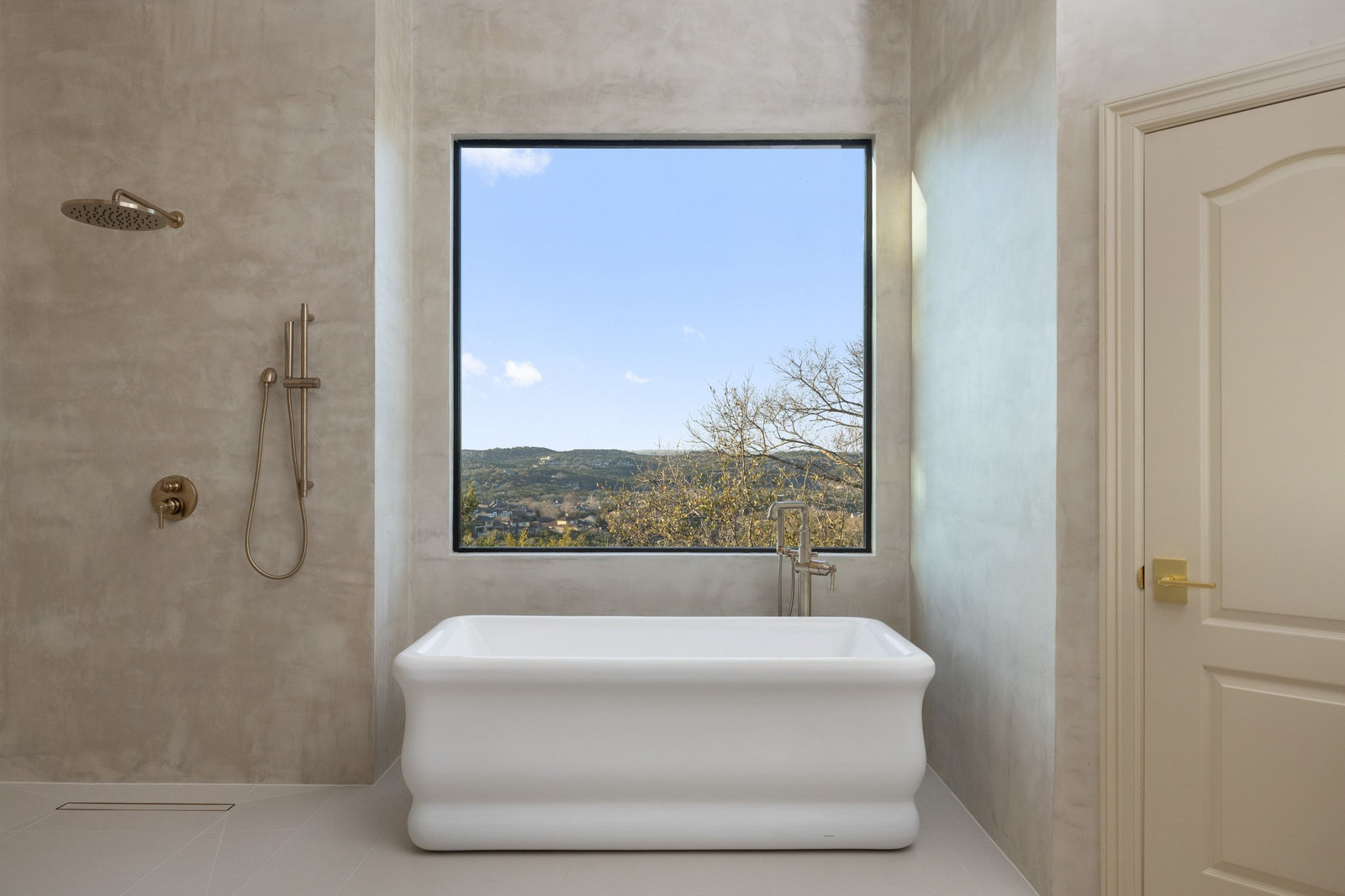
A microcement bathroom we have built
In Barton Creek, a microcement primary bath was part of a full-home renovation alongside a redesigned kitchen and imported Italian stone. Our owners and lead subcontractor studied the process with the supplier before applying it on this project.
Microcement shower questions
Is microcement good for a shower?
Yes, when it goes in as a full wet-area system. SEMCO says microcement is waterproof in showers when it is installed over a liquid waterproofing membrane and finished with a protective sealer, and it leaves no grout lines to clean.
Is microcement waterproof?
As a system, yes. SEMCO describes a membrane, two hand-troweled layers of microcement and a final sealant as completely impermeable. Its own maintenance guide calls sealed microcement water-resistant, which is why the membrane underneath matters in a shower.
Is microcement cheaper than tiling?
Not necessarily. SEMCO says microcement may cost more upfront than some basic finishes, but can save on demolition and waste because it can go over existing tile. Cost depends on the size of the space, the design and the condition of what is underneath.
How long does a microcement shower last?
SEMCO gives an expected lifespan of 15 to 20 or more years for a microcement bathroom that is installed and maintained correctly.
How do I clean a microcement shower?
With a pH-neutral cleaner, warm water and a soft cloth or microfiber. SEMCO says to avoid bleach, ammonia, vinegar, lemon and acid-based cleaners and abrasive pads, and to rinse off products like purple shampoo and self-tanner as soon as you finish.
Do you need a permit for a microcement shower in Austin?
Replacing the shower or tub does. The City of Austin exempts tiling and similar finish work from a building permit, but not a new or replacement shower, tub or tub-and-shower combination. The list does not name microcement, so we confirm the permit path for each scope.
Planning a microcement shower in Austin? Request a walkthrough and we will look at the space, the surface underneath and the permit question with you.
Microcement vs Plaster: What Austin Homeowners & Designers Should Know
Over the last few years, plaster finishes have become increasingly popular in luxury residential design for their soft texture, warmth, and organic feel. But as more homeowners and designers begin incorporating these finishes into bathrooms and wet areas, one major limitation continues to come up: traditional plaster is not waterproof.
That’s where microcement enters the conversation.
At New Edge Renovation, we’ve recently seen a major increase in requests for microcement applications, especially in primary bathrooms and spa-like spaces throughout Austin. While the finish itself has become more popular internationally and in high-end design markets, very few contractors in Austin are currently experienced in properly executing the application process.
For one of our recent luxury bathroom projects, Barton Creek, our team became deeply invested in understanding the material, installation requirements, and long-term performance of microcement directly alongside the supplier before applying it in a real-world environment.
The result completely changed how we approach modern bathroom design.
What Is Microcement?
Microcement is a cement-based decorative coating that can be applied seamlessly over walls, floors, showers, vanities, and other surfaces. It creates a soft, textured appearance similar to plaster while offering significantly more durability and water resistance.
The finish has become increasingly popular in:
- luxury primary bathrooms
- modern spa-inspired spaces
- minimalist interiors
- seamless shower designs
- high-end hospitality projects
One of the biggest reasons homeowners and designers are gravitating toward microcement is its ability to create a clean, continuous look without grout lines or visual interruptions.
The Biggest Difference Between Plaster and Microcement
While both finishes create a warm, organic aesthetic, the biggest distinction is performance, especially in wet areas.
Traditional Plaster
Plaster is beautiful and timeless, but it is generally not intended for direct water exposure unless paired with specialty systems and maintenance considerations. Over time, moisture can become a concern in showers and high-humidity environments.
Plaster works well for:
- accent walls
- fireplaces
- dry interior applications
- decorative texture
Microcement
Microcement delivers a very similar aesthetic while offering:
- water resistance
- higher durability
- seamless applications
- easier maintenance
- fewer long-term concerns in wet environments
Because of this, microcement has become especially desirable for:
- shower walls
- primary bathrooms
- wet rooms
- spa-style spaces
- modern luxury homes
For many homeowners, it creates the visual softness of plaster while being significantly more practical for everyday use.
Why Proper Application Matters
One of the reasons microcement is still relatively uncommon in Austin is because the application process is extremely technical.
Unlike standard tile or paint installation, microcement requires:
- precise layering
- specialty materials
- controlled curing
- correct sealing systems
- deep product understanding
When installed incorrectly, issues like cracking, texture inconsistencies, or waterproofing failures can occur.
Because we believed in the material and its potential within luxury residential design, our owners and lead subcontractor spent weeks studying the process directly with the supplier before applying it within one of our luxury bathroom renovations.
We didn’t want to simply offer the finish. We wanted to fully understand how to execute it properly.
That commitment to process and craftsmanship is what allowed the final result to come together the way it did.
Why Austin Homeowners Are Requesting Microcement
As modern, warm-minimal design continues growing in popularity throughout Austin, homeowners are looking for materials that feel:
- elevated
- timeless
- organic
- low-maintenance
- functional for everyday living
Microcement checks all of those boxes.
We’ve already had multiple clients request the finish specifically for their primary bathrooms after seeing it incorporated into previous projects.
The seamless appearance paired with its durability makes it especially attractive for homeowners who want:
- spa-inspired bathrooms
- modern luxury aesthetics
- fewer grout lines
- softer visual textures
- high-end but livable design
Is Microcement More Expensive Than Plaster?
In many cases, microcement and high-end plaster applications fall within a similar price range depending on the scope and installation complexity.
However, many homeowners ultimately choose microcement because of the additional performance benefits it provides, particularly in bathrooms and wet areas where durability and water resistance become critical long-term considerations.
Rather than sacrificing aesthetics for practicality, microcement allows homeowners to achieve both.
The Future of Bathroom Design in Austin
We believe microcement will continue becoming more prominent throughout Austin’s luxury residential market over the next several years, especially as homeowners prioritize:
- warm minimalism
- spa-inspired interiors
- seamless materials
- intentional functionality
While the finish is still relatively new to the local market, we’ve already seen significant interest from both homeowners and designers looking for alternatives to traditional tile-heavy bathrooms.
Luxury Bathroom Renovations in Austin, TX
At New Edge Renovation, we specialize in elevated bathroom renovations designed around both aesthetics and functionality. From layout reconfigurations to specialty finishes like microcement, our team works closely with homeowners and designers to bring highly intentional spaces to life.
Whether you’re planning a modern bathroom renovation, luxury primary suite, or custom shower design, our team would be happy to walk your space and discuss potential options for your project.